 Call Us :

Supported Independent Living (SIL) is an essential support system designed to help individuals with mobility issues live more independently while receiving daily assistance. For caregivers, understanding how SIL works is crucial in ensuring participants receive the right level of care, support, and dignity in their everyday lives. It not only improves quality of life for participants but also provides reassurance for families who want the best possible care outcomes.
Understanding the Role of Supported Independent Living
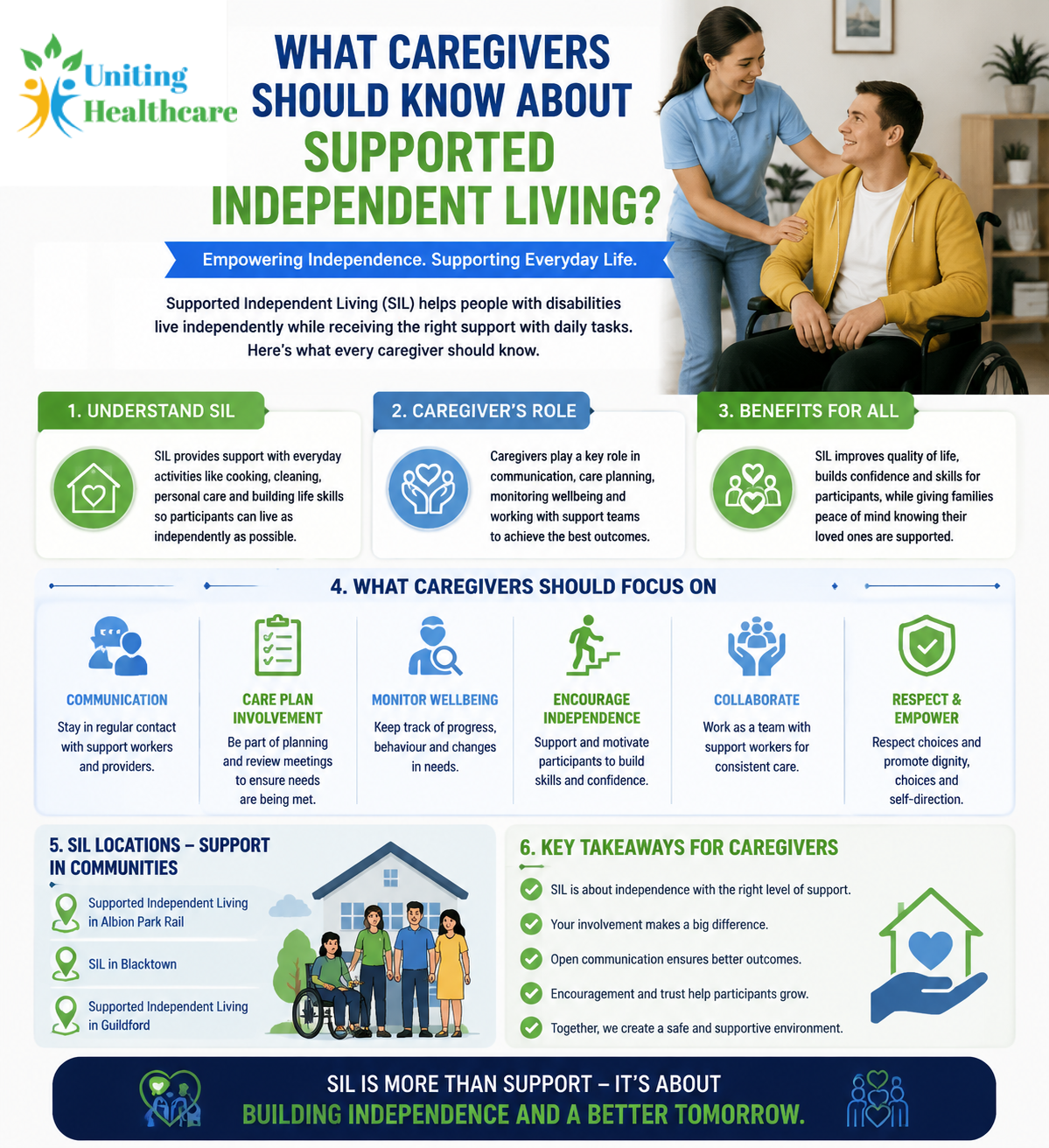
Supported Independent Living focuses on assisting individuals with daily tasks such as cooking, cleaning, personal care, and skill development. The goal is to promote independence while still providing structured support when needed. Caregivers play an important role in coordinating and communicating with SIL providers to ensure consistency in care.
For example, Supported Independent Living in Albion Park Rail offers structured environments where participants receive tailored support based on their personal goals and abilities. This ensures that care is not only practical but also empowering.
Key Responsibilities of Caregivers in SIL Arrangements
Caregivers are not just observers as they are active participants in the SIL journey. Their responsibilities often include:
- Coordinating with support workers and providers
- Monitoring participant progress and wellbeing
- Communicating changes in needs or behaviour
- Supporting emotional and social development
- Ensuring care plans are followed effectively
In services like SIL in Blacktown, caregivers often collaborate closely with professionals to ensure participants receive consistent and high-quality care tailored to their lifestyle and goals.
Benefits of SIL for Participants and Families
Supported Independent Living provides a balanced approach between independence and structured care. Participants gain confidence in managing daily tasks, while families experience reduced stress knowing their loved ones are supported.
In regions such as Supported Independent Living in Guildford, SIL programs focus on creating safe, supportive environments that encourage community participation and personal growth. This helps participants build essential life skills while maintaining a strong sense of independence.
How Caregivers Can Support Better Outcomes?
Caregivers can enhance SIL outcomes by maintaining open communication with providers and encouraging participants to engage in daily routines. Regular involvement ensures that any changes in support needs are addressed quickly and effectively.
It is also important for caregivers to respect the independence of participants while providing guidance when necessary. This balance helps build confidence and long-term stability.
Understanding Supported Independent Living is essential for caregivers who want to ensure the best possible care for their loved ones. SIL not only supports daily living needs but also empowers individuals to live more independently with dignity and confidence. With the right collaboration between caregivers and providers, participants can achieve meaningful progress in their lives.
Get In Touch With Us Today
For professional and compassionate SIL support services tailored to individual needs, connect with Uniting Healthcare and explore how we can help create a safer, more independent future for your loved ones.
FAQs about Supported Independent Living
- What is Supported Independent Living (SIL)?
Supported Independent Living (SIL) is an NDIS support service that helps people with mobility issues live independently while receiving assistance with daily tasks such as cooking, cleaning, and personal care.
- What role do caregivers play in SIL?
Caregivers help coordinate care, communicate with support workers, monitor wellbeing, and ensure the participant’s needs and goals are being met effectively.
- How is SIL different from full-time residential care?
SIL focuses on promoting independence while still offering support, whereas residential care often provides more intensive and less independent living arrangements.
- Do caregivers need to be involved daily in SIL?
Not necessarily. SIL providers handle most daily support, but caregivers remain involved in planning, communication, and reviewing progress.
- What should caregivers expect from SIL providers?
Caregivers can expect structured care plans, trained support workers, regular updates, and personalised support tailored to the participant’s needs.
- How does SIL support independence?
SIL encourages participants to develop life skills such as cooking, budgeting, cleaning, and social interaction while receiving appropriate assistance.
- Can SIL arrangements be customised?
Yes. SIL support is highly flexible and tailored based on individual needs, goals, and living arrangements.
- What should caregivers know about SIL locations?
SIL services are available in various regions, including Supported Independent Living in Albion Park Rail, SIL in Blacktown, and Supported Independent Living in Guildford, each offering tailored support environments.
- How do caregivers communicate with SIL staff?
Caregivers typically communicate through scheduled meetings, reports, phone updates, and care planning reviews to ensure consistent support.
- What is the main benefit of SIL for families?
The main benefit is peace of mind—families know their loved ones are safe, supported, and gaining independence while receiving professional care.

